
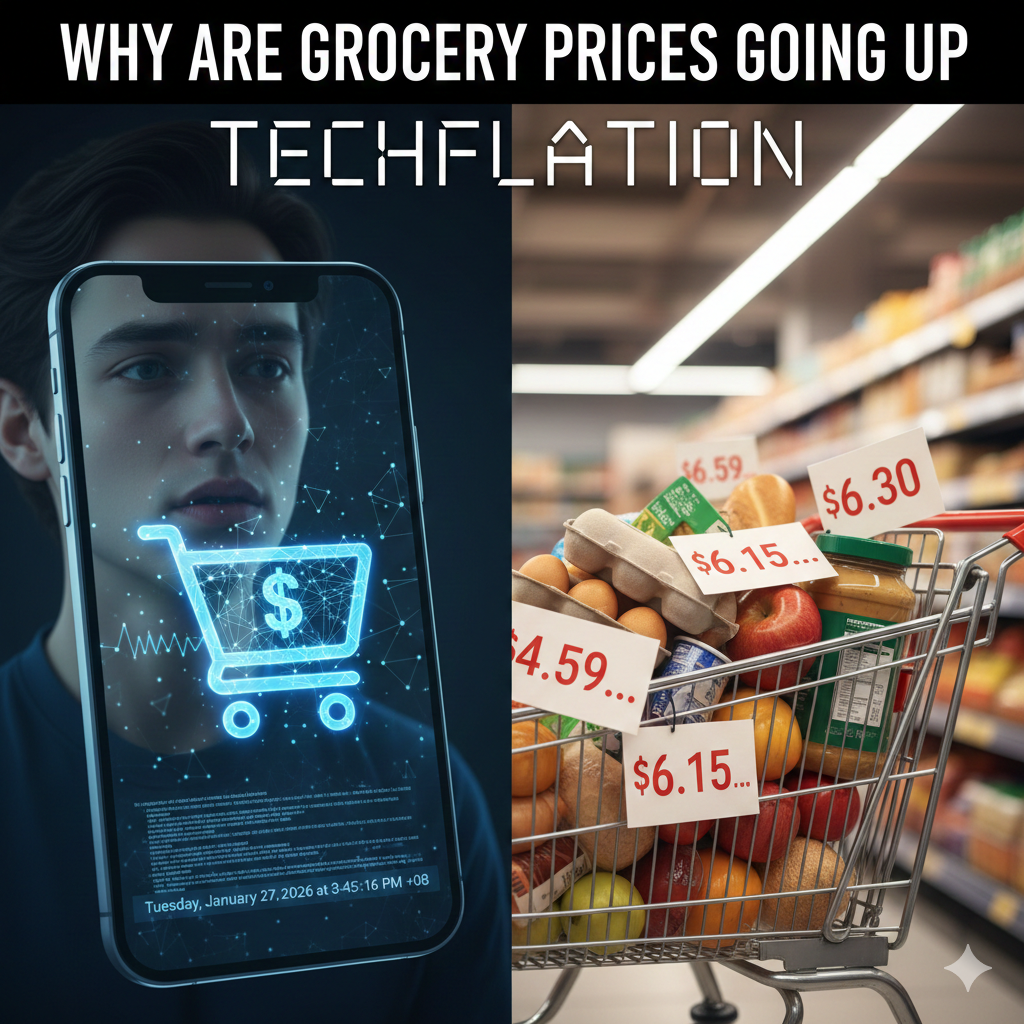
A journalistic investigation conducted by Groundwork Collaborative conducted a series of controlled experiments to see if different consumers were charged different prices for the exact same groceries at the exact same time and location.
Techflation
Techflation is the process where companies use algorithmic discrimination, using purchase history, behavioral data and headroom(the maximum amount a specific person is willing to pay) to set prices.
The test involved 400 volunteers who were tasked to purchase the same items at the exact same time and location. A small group in a room ordered identical items (eg. eggs, milk, etc.) from Instacart. Results showed price variations of up to 70 cents per item.
The findings showed that 75% of products showed price variations and shoppers were segmented into price buckets where some paid significantly more for their entire basket than others. The system seemed to maximize profits for the company at the expense of fairness. In another study, online grocers show higher price dispersion than brick‑and‑mortar stores, driven by algorithms that vary prices over time, by delivery ZIP code, and across competing retailers for identical SKUs.¹
While Instacart initially claimed that prices were set by retailers, the investigation revealed that Instacart managed prices and used tools like “Smart rounding” to flex prices upward for incremental sales. Moreover, Instacart acquired Eversight, an AI company that allows for invisible oversight of prices and customer behaviour. Evidence suggests that these algorithms are moving to retail shelves via electronic shelf labels, allowing for real time price changes in actual stores.
The findings suggests a change in how grocery business is conducted, with profits prioritized over volume, pricing is regarded as the most important mechanism for profit, more effective than cutting costs or increasing sales volumes. This also creates an information asymmetry, companies now know a lot more about consumer behavior than consumers know about retail prices. We are seeing a massive transfer in wealth from ordinary citizens to large corporations.
There has been a call to action for regulators to look under the hood of such price mechanisms to give an accounting to customers. Customers need to know if the price they are paying for is fair.
What can you do to avoid dynamic pricing
Algorithms rely on constant data to map out your purchasing behavior, to beat dynamic pricing, you would need to disrupt the algorithm’s ability to determine your headroom. You could choose to shop as a guest, and shop using a private or incognito window. This way the app cannot trace your history and suggests prices for you based on your purchasing patterns. You should also clear your cookies regularly, frequent shopping data builds a profile that can trigger price surges. You can also switch between devices, compare prices on your phone and laptop to see which one gives you a cheaper pricing bucket.
- Aparicio, D., Metzman, Z., & Rigobón, R. (2021). The pricing strategies of online grocery retailers. Quantitative Marketing and Economics, 1-21. https://doi.org/10.1007/s11129-023-09273-w.